

The 2025 Guide to Visitor Management & Why It Matters

Posted 15 May
13 min read
Key Takeaways:
- Relying on pen-and-paper logs and outdated software is holding back your operations.
- Visitor management is the process of managing and guiding individuals who enter your space.
- Visitor management is crucial for security threats, meeting compliance standards, emergency situations, and streamlining processes.
- Visitor management has evolved from manual logbooks to AI-powered, contactless systems, enhancing security, efficiency, and visitor experience.
- Visitor Management keeps premises safe, improves visitor experience, enhances efficiency, and offers data-driven insights.
- From healthcare, schools, factories, hospitality and manufacturing to IT parks and offices, visitor management is crucial for every industry.
- Robust Visitor Management System, Convex vZit, solves real-world problems, leaving a lasting impression of how well you maintain professionalism.
Table of Contents
- Why Front Desk Needs an Upgrade?
- What is Visitor Management & Why Is It Important?
- Evolution of Visitor Management (Then vs Now)
- Why Visitor Management Matters in 2025?
- Key Features to Look for in a Modern Visitor Management Process
- Industries that Benefit Most from a Streamlined Visitor Flow?
- Common Pitfalls to Avoid
- How Smart Visitor Management System Solves
Why Front Desk Needs an Upgrade?
Your front desk is the first touchpoint for individuals entering your space. And if you still rely on pen-and-paper logs or outdated software, it’s holding your entire operations back!
It’s 2025, and user expectations have changed. People expect speed, personalization, and professionalism the moment they walk into your premises. Manual check-ins are old-school now, error-prone, and not secure. In case of mass crowds, receptionists become overwhelmed with repetitive tasks. All of this leads to less visibility and no quick way to respond in an emergency.
The solution? A digital front desk system
Upgrading your front desk isn’t about replacing people but supporting them with smarter and more advanced tools.
- Welcome guests faster
- Streamlined check-in process
- Automate repetitive tasks
- Strengthen security without making the process complicated
Modern visitors’ experiences start at the front desk, and it’s time to move on from a cumbersome and inconvenient check-in process.
If the front desk sets the tone for every visit, how are you making the first impression count?
What is Visitor Management & Why Is It Important?
The shift toward digital solutions is due to two factors: strong security needs and enhancing the visitor experience. Modern premises need robust solutions to safeguard visitors and intellectual property.
Visitor management is the process of managing, tracking, and guiding every individual who enters your space, be it a client, contractor, delivery person, or employee. It’s not just about signing people in but ensuring safety, security, and compliance, as 65% of data breaches stem from identity-related vulnerabilities.
In the fast-paced landscape, one cannot afford blind spots. You need to know who is on your premises and why they are there, how long they have stayed, and whether they have followed the required protocol.
Why Does Visitor Management Matter Now More Than Ever?
- Security threats are real. You cannot solely rely on memory or paper logs.
- Compliance rules are stricter. Many industries require visitor records, consent forms, and real-time reporting.
- Visitor management shapes your brand/business. Implementing one enhances both visitor satisfaction and staff efficiency.
- Emergencies demand quick action. Accurate visitor data helps in evacuations.
Types of Visitors Tracked
Organizations interact with diverse visitors on a daily basis. Managing and tracking these individuals is crucial:
- Business Visitors: Clients and customers, partners and investors, suppliers and vendors.
- Contractors and Service Providers: Maintenance personnel, IT specialists, cleaning staff.
- Regulatory and Government Officials: Auditors, inspectors, or compliance officers.
- Job Applicants
- Delivery Personnel
- Personal Visitors
- Event Attendees
By categorizing and managing these diverse visitors, organizations can increase security protocols and provide a welcoming experience for all.
Evolution of Visitor Management (Then vs Now)
Visitor management has come a long way, transforming from traditional paper logbooks to modern and sleek systems prioritizing convenience and security.
Manual Logbooks and ID Badges (Pre-2000s)
Before the 90s, organizations relied on paper logbooks for visitor’s sign-ins, where guests manually entered their details. Whether corporate office, venue, schools, or visitors, everyone is required to provide their information in a physical book. This method was time-consuming, error-prone, and lacked real-time tracking capabilities.
Digital Sign-in and Self-service Kiosk (2000s)
The intro of digital technology brought significant advancements. Organizations began implementing self-service kiosks, allowing visitors to fill in their details directly into the system. This improved efficiency, reduced administrative burdens, and enhanced data accuracy.
Integration with Access Control System (2010s)
Visitor management software started integrating with access control systems, letting organizations control and monitor visitors’ access to different areas. This integration allowed real-time identification and verification, ensuring only authorized visitors could access restricted areas.
Mobile and Cloud-Based Solutions (2010s)
Progress in cloud computing led to the emergence of cloud-based visitor management systems. These solutions offered flexibility and remote access to visitor data. Mobile apps allowed businesses to manage visitor check-ins and access control, providing mobility and convenience.
Contactless and QR Code Technology (2020s)
COVID-19 accelerated the adoption of contactless technologies. Visitor management software began incorporating QR codes, which allowed visitors to pre-register and check-in without physical contact. This streamlined the check-in process.
AI and Smart Building Integration (Present Day)
Modern visitor management now leverages Artificial Intelligence to make smart decisions. For instance, AI can analyze visitor trends to identify busy hours, alert security regarding unusual activity, and more. When connected with smart building systems, these tools automatically adjust with lighting, temperature, or even access control. This creates a smoother and responsive experience.
Why Visitor Management Matters in 2025?
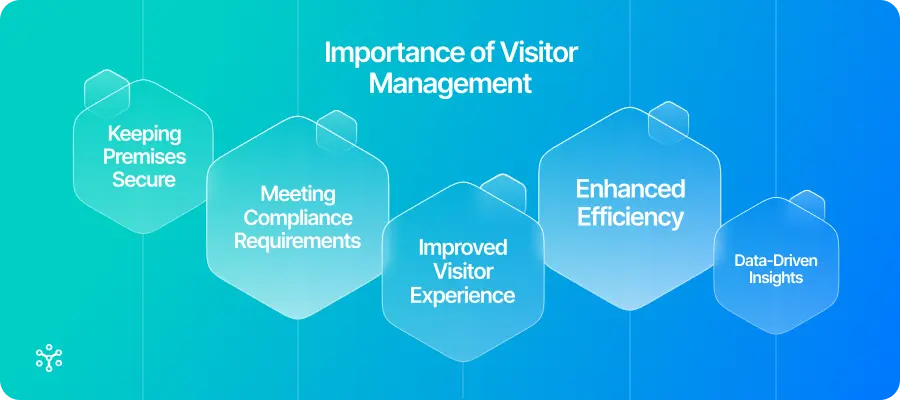
As the world of business continues to evolve, so does the technology that supports it. In 2025 and beyond, we anticipate advancements in the way businesses manage their visitors to deliver a seamless experience.
Keeping Premises Secure
Visitor management plays a pivotal role in maintaining security within the premises. In a hybrid workplace, especially where employees frequently move in and out of space, it’s crucial to keep track of who enters and leaves the building. This prevents unauthorized access and reduces the risk of data theft or physical breaches.
For instance, if an unauthorized person gains access to your space using a stolen or duplicate badge, a robust visitor management system can flag the unusual activity, send quick alerts, and restrict access to sensitive areas.
Meeting Compliance Requirements
Visitor management automates and digitizes visitor records to ensure up-to-date documentation, crucial for meeting regulatory requirements.
Visitor management can be set up to follow industry standards for data privacy, health, safety, and security. With features like access control, ID checks, and real-time tracking, businesses can stay compliant and avoid legal troubles.
Improved Visitor Experience
Making a positive first impression is highly crucial today. First impressions aren’t just about a smile at the front desk; they are about the entire journey, from invite to exit.
A visitor management system in place enhances and simplifies the experience by allowing them to pre-register guests before they arrive, receive all the essential information by email or SMS, like directions, parking info, or meeting room locations, and check-in quickly through a kiosk or QR code when they arrive.
This not only saves time but also leaves guests with a sense of professionalism. Whether it’s a client or a contractor, the way one is welcomed speaks volumes about how you run your workplace.
Enhanced Efficiency
Waiting in a crowded reception area can be discomforting for many guests. Even the host sitting alone at the reception would find it tough to manage everything manually.
Visitor management streamlines and automates repetitive tasks like data entry, badge creation, and host notifications. It frees up the front desk to focus on what really matters, like greeting visitors, handling queries, and keeping the premises organized. For businesses, this means faster check-ins, fewer delays, and a more efficient workflow overall.
Data-Driven Insights
The best visitor management practices revolve around utilizing data. You gain valuable data insights at every check-in and understand who enters your premises and why they are there to enhance your workplace management strategies.
Over time, you can track trends like peak hours, frequent visitors, and how long people typically stay within the space. This data can help improve scheduling, optimize staffing at the front desk, or even adjust security protocols.
Data analytics is also crucial for space planning by tracking the space usage in real-time and occupancy, this way businesses can make smart and quick decisions.
Key Features to Look for in a Modern Visitor Management Process
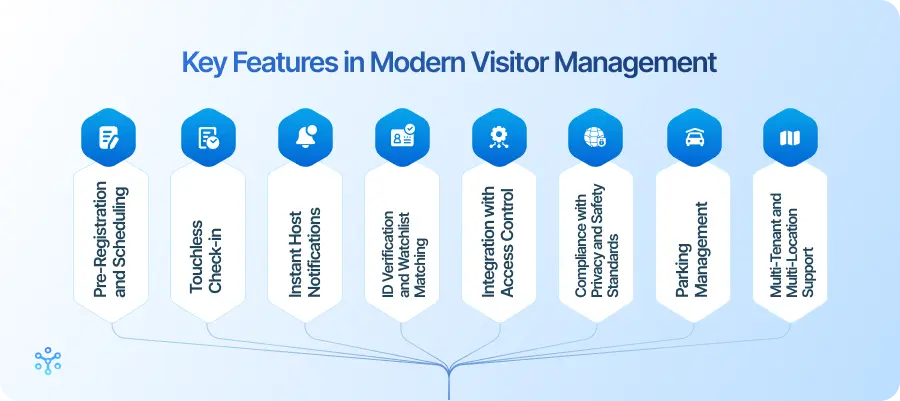
If you are looking to modernize your front desk experience, then opt for a system that genuinely improves security, speed, and the way people feel when they walk through your door.
Here are some must-have features that define smart visitor management in 2025:
- Pre-Registration and Scheduling: Registering visitors in advance is a time-consuming task. A modern visitor management solution allows advanced registration and scheduling of your visit, helping you avoid last-minute hassles.
- Touchless Check-in: No one wants to touch shared screens or fill out paper logs anymore. Touchless check-ins allow visitors to sign in using their own device or via QR code, facial AI-based face recognition, or a mobile app. It is quick, hygienic, and aligns with today’s user needs.
- Instant Host Notifications: Once a guest checks in, the host is notified immediately through SMS, email, or an app notification. This avoids confusion or delays in the lobby, especially in busy offices or shared spaces.
- Badge Printing: A modern visitor management instantly prints visitor badges with names, photos, logos, visit purpose, or even restricted access zones. These badges add a layer of security while making it easy for staff to identify guests at a glance.
- ID Verification and Watchlist Matching: A smart system for visitor management scans IDs or business cards, verifies identity, and even cross-checks against internal watchlists. This prevents unauthorized access.
- Integration with Access Control: Access control system allows visitor movements to be tracked and restricts entry to sensitive areas at all times.
- Compliance with Privacy and Safety Standards: Whether you are in healthcare, finance, or education, data privacy matters. A modern visitor management system should comply with industry regulations like HIPAA, GDPR, or local safety laws.
- Parking Management: Visitor management automates the process of vehicle parking, giving real-time parking slot availability, pricing, and more.
- Multi-Tenant and Multi-Location Support: If you manage large campuses, coworking spaces, and multiple offices, with a centralized dashboard, a modern visitor management works across locations to keep everything aligned.
Industries that Benefit Most from a Streamlined Visitor Flow?
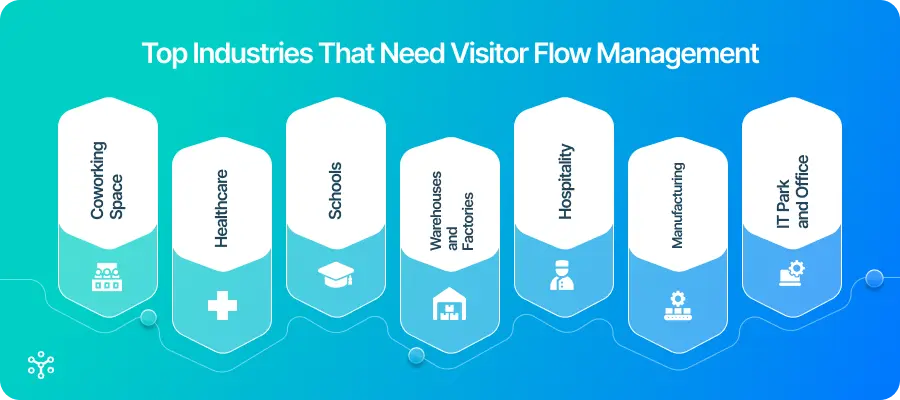
Visitor management can benefit any business, but certain industries face specific challenges that a modern system can help address. Let’s find which industries can benefit the most.
- Coworking Space: A visitor management track visitors entering the space daily, freelancers, clients, delivery persons, and guests. The system ensures the right people enter the premises and keeps unwanted visitors out. It adds an extra layer of security and professionalism, building trust.
- Healthcare: Healthcare facilities are looking for better ways to deliver quality care. Visitor management ensures a seamless check-in process to safeguard the premises. A visitor system helps pre-screen visitors, manage foot traffic in sensitive areas, and maintain accurate logs for audit.
- Schools: School security cannot be compromised, and therefore, intuitive visitor management proves to be highly beneficial. A visitor system helps schools monitor who enters the campus, verify identities, and prevent unauthorized access. Whether it’s a parent-teacher meeting or a maintenance visit, everything is recorded and controlled.
- Warehouses and Factories: Visitor management in warehouses and factories involves a system that tracks and manages visitor entry and exit. This enhances security, improves efficiency, and provides a smooth experience for both visitors and staff.
- Hospitality: Hotels, residential complexes, and gated communities handle a huge volume of visitors, like guests, delivery agents, and maintenance teams. A digital system improves and enhances check-in speed, guest experience, and provides real-time logs for security teams for better service.
- Manufacturing: Manufacturing units are strict zones with safety hazards. Visitor management in this sector increases security by improving transparency and meeting compliance standards.
- IT Park and Office: From clients to interview candidates, large campuses and office buildings witness too many visitors on a daily basis. A start-of-the-art visitor management ensures a streamlined and hassle-free experience and maintains utmost security.
Common Pitfalls to Avoid
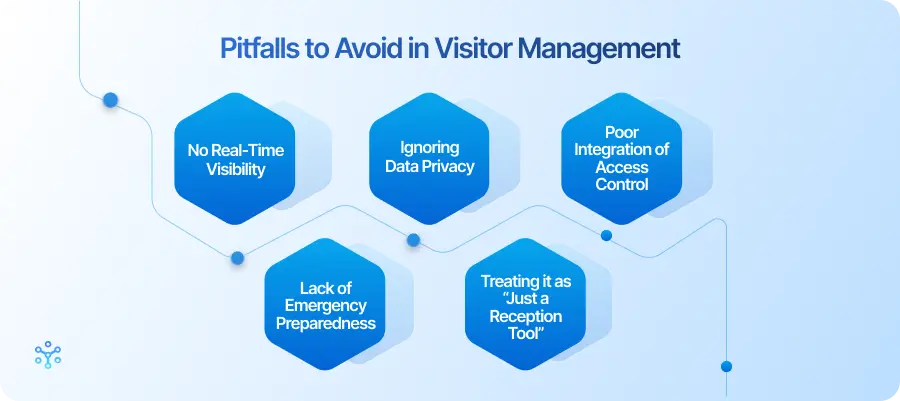
Many organizations run into trouble even with the best intentions when setting up or managing their visitor flow. A small oversight can lead to big headaches down the road. Here are some common pitfalls to avoid:
No Real-Time Visibility
Poor visitor management with no real-time visibility presents significant pitfalls, hindering security and compliance. An efficient visitor management system in place should let you know instantly who is on-site, why they are there, and who they are meeting.
Ignoring Data Privacy
Collecting personal data from visitors comes with responsibility. Many businesses overlook data privacy regulations like HIPAA and GDPR. Make sure your system encrypts sensitive data and offers consent options.
Poor Integration of Access Control
Poor integration of access control with visitor management can lead to several security and operational problems. This includes the risk of unauthorized access to restricted areas, difficulty in tracking visitors’ movement, compliance issues, and more. An integrated, streamlined system improves security and streamlines processes to enhance the overall experience for employees and visitors.
Lack of Emergency Preparedness
About 54% of facilities don’t have visibility into where visitors are during an emergency situation. A lack of emergency preparedness with poor visitor management can lead to safety risks and even legal consequences. A modern visitor management lets you generate evacuation lists, track visitor check-in/out times, and even send emergency alerts directly to visitors’ phones.
Treating it as “Just a Reception Tool”
Visitor management is not just limited to the front desk. It’s a unique security tool, a compliance solution, and a key part of guest experience. Underestimating its value can lead to missed opportunities across your operations.
How Smart Visitor Management System Solves Real-World Problem?
No matter what type of business you are running, visitor management is efficient enough to solve real-world challenges. A hassle-free, positive check-in experience leaves a lasting impression, reflecting how well your organization works and maintains professionalism.
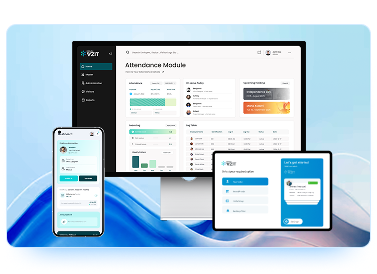
A Visitor Management System (VMS) not only addresses visitor-related tasks but also boosts the security system of your premises. Our top-notch VMS, Convex vZit, is a sophisticated digital solution that automates the process of registering and managing visitors within premises.
Here’s how VMS tackles everyday problems:
- Have a slow check-in process? A VMS lets guests check-in within seconds, even before they arrive.
- Security gaps? It captures photos, verifies identities, and notifies the host on the arrival of their guests.
- Lost visitor logs? Don’t worry! Everything is stored digitally.
- Need to stay compliant? Whether it’s emergency protocols or NDA, a VMS can collect and store all information without the paperwork pile.
- Trying to impress clients? A smooth check-in reflects how organized your business really is.
Wrapping It Up
Every facility, organization, or residential complex has unique requirements. Visitor management secures the environment and makes the ambiance warm and welcoming.
In today’s fast-moving world, people remember how you made them feel the moment they stepped in. A smart VMS ensures that the moment is smooth and effortlessly professional. It’s not just about replacing registers with badges but about setting a tone. One that says, “We’re organized. And we’re ready for the future.”
When your front desk works smarter, your business seems sharper.
Try Convex vZit for free
Latest Blogs
Visitor Management System Trends You Cannot Ignore in 2025
In the year 2025, the visitor management system (VMS) is transforming how businesses are welcoming, managing and securing guests. Starting from AI-driven person...
Read More
What are the Signs Your Workplace Needs a Visitor Management System?
It is your time to upgrade to a smart visitor management system? At ConvexSol, we help enterprises modernize the experience of visitor reception with Convex vZi...
Read More
On-Premises vs. Cloud-Based Visitor Management System – Choosing the Best
While on-premises visitor management systems are already there, cloud-based visitor management systems are rapidly becoming the preferred choice for progressive...
Read More
What Makes a Visitor Management System for Hospitals Essential Today?
Key Takeaways: Table of Contents What is a Visitor Management System? A Visitor Management System (VMS) is software-based technology, allowing businesses ...
Read More Visitor Management System Trends You Cannot Ignore in 2025
In the year 2025, the visitor management system (VMS) is transforming how businesses are welcoming, managing and securing guests. Starting from AI-driven person...
Read More What are the Signs Your Workplace Needs a Visitor Management System?
It is your time to upgrade to a smart visitor management system? At ConvexSol, we help enterprises modernize the experience of visitor reception with Convex vZi...
Read More