

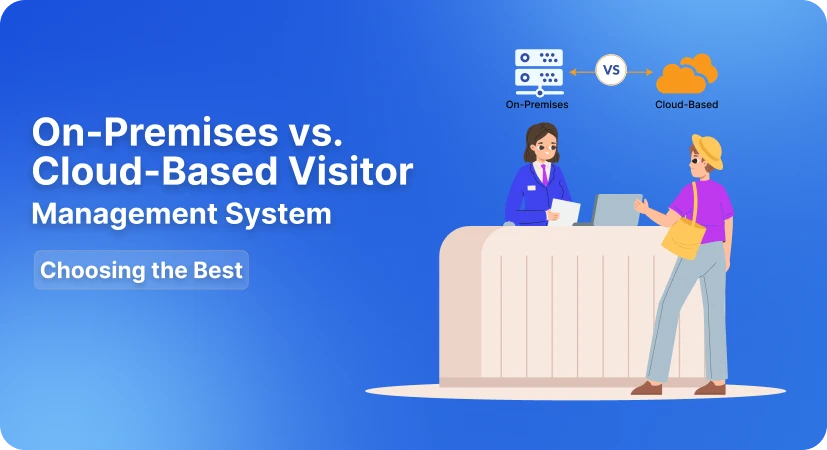
On-Premises vs. Cloud-Based Visitor Management System – Choosing the Best
Posted 2 June
9 min read
Key Takeaways:
- VMS solutions are essential for businesses to enhance their security in this technology-backed world.
- There are two types of VMS solutions: on-premises and digital VMS.
- On-prem VMS solutions require visitors to enter their details manually when entering and exiting the building, leading to long queues and a busy front desk.
- Digital VMS solutions allow businesses to track and monitor their visitors in real time, leading to greater scalability, security, and flexibility.
- Cloud-based digital VMS solutions allow organizations to access visitor data remotely from anywhere with a stable internet connection.
Table of Content
- Introduction
- What is an on-premises visitor management system?
- What is a cloud-based visitor management system?
- A brief comparison between on-premises and cloud-based visitor management systems
- Should you switch to cloud-based VMS from your on-prem VMS?
- Emerging technologies in the visitor management systems
- Are you ready to switch to cloud-based visitor management systems?
- At a glance
Introduction
A paradigm shift is taking place in the world of physical security. Though on-premises VMS (visitor management system) was once regarded as the gold standard of security, these are being replaced with cloud-based VMS. Cloud-based visitor management system is a part of physical business security protocols using an internet connection to secure gates, doors, and other access points, from schools, real estate, and enterprises to hotels and hospitals.
However, did you know that over 76% of facilities still rely on their on-premises visitor management systems or no system at all? Another study shows that about 30% of businesses plan to enhance their VMS within the upcoming two years. Cloud-based visitor management systems come with centralized control over visitor history across multiple IT locations, ensuring compliance with industry regulations.
So, should you switch your on-premises business VMS to a cloud-based one? Let’s discuss more about this in the following blog post.
What is an on-premises visitor management system?
An on-premises visitor management system is hosted and installed within the physical infrastructure of a company.
These VMS solutions are located typically on the company’s data centers and servers. The IT department of the organization is responsible for managing, maintaining, and controlling the VMS software.
Using on-premises VMS solutions also requires routine maintenance, troubleshooting issues, and installing necessary upgrades.
What is a cloud-based visitor management system?
A cloud-based visitor management system is an advanced VMS solution hosted on remote servers, allowing data access through an internet connection.
Unlike on-premises VMS, the software providers manage the cloud-based VMS to manage the system, troubleshoot issues, handle maintenance, and install necessary upgrades.
Additionally, a cloud-based visitor management system also helps organizations oversee the entire visitor life cycle from pre-registration to check-out. Thus, cloud-based VMS approach offers flexibility and functionality across multiple sites, which you cannot perform by utilizing traditional pen-and-paper visitor management system.
A brief comparison between on-premises and cloud-based visitor management systems
While on-premises visitor management systems are already there, cloud-based visitor management systems are rapidly becoming the preferred choice for progressive enterprises.
There are numerous differences between cloud-based and on-premises visitor management systems that can be grouped into various categories, including the following:
| Topic | On-premises VMS | Cloud-based VMS |
|---|---|---|
| Cost Structure | It requires substantial initial investment in software and hardware, along with ongoing costs. | It operates on a predictable subscription model and typically comes with lower upfront costs. |
| Data Access | It is usually limited to on-site access unless there is a VPN configured, which can further introduce additional security considerations. | It allows secure data access from any location and any device with an internet connection. |
| Deployment | On-premises physical visitor management systems need a lengthy procedure, impacting the time and focus of multiple team members, which can further disrupt the ongoing productivity of the organization. | Cloud-based VMS solutions get started within hours not months with a pre-configured and pre-loaded visitor management solution, which will not disrupt the ongoing productivity of the brand. |
| Security Updates | It requires implementing security updates manually, which often leads to potential delays and vulnerabilities. | Cloud service providers automatically apply continuous patches and updates without needing any manual intervention. |
| Disaster Recovery | On-premises visitor management systems require separate disaster recovery solutions, which are often expensive. | Cloud-based visitor management systems come with built-in redundancy and off-site backups to ensure business continuity. |
| Scalability | These VMS solutions are limited by hardware constraints. Thus, scaling them requires significant IT intervention along with capital investment. | Cloud-based visitor management systems can easily be scaled to accommodate new locations, growth, or fluctuating volumes. |
| IT Resource Allocation | On-premises visitor management systems demand dedicated IT resources for managing and updating the system and resolving issues. | Maintaining cloud-based VMS solutions requires minimal IT involvement with the provider handling tasks related to troubleshooting and updating the system. |
| Connectivity | Integrating on-premises visitor management systems with your organizational security systems from a third-party provider is more time intensive and expensive. Alongside this, it will make the security system of the organization remain disparate. | Cloud-based visitor management systems use API keys to allow organizations to integrate with video, identity, and visitor management policy, as well as other required software solutions. With this technology, it will be easier for organizations to centralize their visitor information, otherwise isolated security systems. |
| Maintenance, Upgrades, and Upkeep | The users will be responsible for upkeeping and maintaining the on-premises visitor management systems. Alongside this, there are physical disks with traditional VMS, which can take more time to install. | For cloud-based visitor management systems, the manufacturer is the primary responsible person to maintain the off-site server. They automatically update and deploy cloud-based VMS software solution through an internet connection. It can further protect organizational security against new cyber threats without any system downtime. |
| Data Protection | For on-premises visitor management systems, users must focus on securing their on-premises server from outsider physical security threats. Alongside this, organizations should give more emphasis to other physical security elements, such as security guards and locks to protect their on-premises VMS solutions. | For cloud-based visitor management systems, the manufacturer and cloud provider will be in charge of protecting and encrypting both in-transit and at-rest visitor data in the VMS solution. |

Got more information on cloud-based VMS?
Contact Us!
Should you switch to cloud-based VMS from your on-prem VMS?
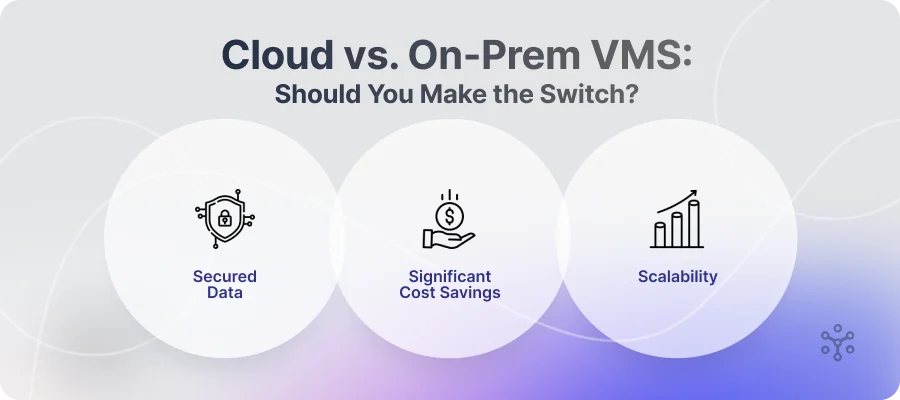
As per the reports by Forbes, about 83% of organizations across diverse industries will process their workloads through cloud-based systems in 2020. Another study by International Data Group shows that about 69% of corporations have already deployed cloud-based services in their capacity and about 18% are planning to deploy cloud-based systems in their operations soon.
Cloud-based services allow you to manage the computer infrastructure-related requirements at their core in the most impactful way. The following are some of the in-depth reasons why you should switch to cloud-based visitor management systems from on-premises VMS:
1. Secured Data
Compared to on-premises visitor management systems, cloud-based VMS solutions mitigate potential security threats by ensuring that the data is secured and protected round-the-clock.
Data shows that about 94% of businesses reported improvements in security after switching to cloud-based visitor management systems. While 91% of businesses found it easier to comply with the government compliance requirements after implementing cloud-based solutions.
2. Significant Cost Savings
About 20% of companies have their own initial cost concerns when they plan to deploy cloud-based solutions, including visitor management systems. However, you should understand that cloud-based VMS can save you money and time in the long run.
Cloud computing platforms can also expand with your business needs, so you do not have to spend money on expensive upgrades with increased footfall or more employees. Along with this, shifting towards cloud-based visitor management systems can significantly reduce the costs for storing, managing, and maintaining data.
3. Scalability
On-premises visitor management systems can keep your operational managers occupied with data and computer-related issues. Traditional VMS solutions can further take up a big chunk of their attention and time, preventing them from concentrating on the core business functions.
On the other hand, cloud-based visitor management systems can take care of your data and IT infrastructure-related requirements in an efficient way. It can further let the business devote more time towards the business’s aspects, having a direct impact on your bottom line.
Emerging technologies in the visitor management systems
The landscape of visitor management systems is rapidly evolving, with cloud-based solutions at the forefront of this transformation. Integration of emerging technologies like biometrics and artificial intelligence (AI) is one of the most notable advancements in visitor management systems.
AI-powered systems in your VMS can automate certain repetitive tasks like identifying visitors, tracking and reporting them. While biometrics like fingerprint scanning and facial recognition can enhance overall security of your organization and ensure a seamless and user-friendly check-in experience, streamlining the front desk operations and creating more modern and efficient workplace.
Along with this, cloud platforms come with scalability and flexibility to allow organizations to adapt to or expand to dynamic security requirements. With new features, like real-time data analytics and remote management capabilities, cloud-based VMS will continue allowing businesses to supervise multiple locations from centralized, single system.
Are you ready to switch to cloud-based visitor management systems?
Does your organization still check customers’ data, manage visitors, customize on-premises people flow, and restrict access to sensitive areas manually? Integrating cloud-based visitor management systems in your organizational security process can automate certain tasks and manage the VMS from anywhere, across all devices (desktop, phone, tablet) while maintaining the confidentiality of all your visitors.
Unlike on-premises visitor management systems, cloud-based VMS facilitate contactless check-in procedures, ensuring the overall safety of your staff members. Along with this, cloud-based visitor management systems ensure data protection with stringent security protocols, making cloud-based solutions ideal for organizational visitor management policy.
At a glance
Though both on-premises and cloud-based visitor management systems have their own advantages, cloud-based VMS solutions offer more scalability, flexibility, and cost-effectiveness for organizations with dynamic security needs or those requiring remote access and management capabilities. Still, you should consider certain factors like the type and size of the company, budget constraints, and security requirements. We hope this blog post can help you understand everything about whether you should choose an on-premises or cloud-based visitor management system for your organization. Are you ready to scale up your VMS? Our cloud-powered VMS solutions at Convex vZit can be your preferred choice.
Related Post
Visitor Management System Trends You Cannot Ignore in 2025
What are the Signs Your Workplace Needs a Visitor Management System?
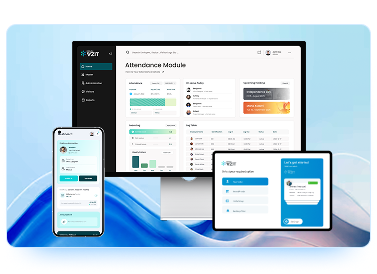
Try Convex vZit for free
Latest Blogs
Visitor Management System Trends You Cannot Ignore in 2025
In the year 2025, the visitor management system (VMS) is transforming how businesses are welcoming, managing and securing guests. Starting from AI-driven person...
Read More What are the Signs Your Workplace Needs a Visitor Management System?
It is your time to upgrade to a smart visitor management system? At ConvexSol, we help enterprises modernize the experience of visitor reception with Convex vZi...
Read More
What Makes a Visitor Management System for Hospitals Essential Today?
Key Takeaways: Table of Contents What is a Visitor Management System? A Visitor Management System (VMS) is software-based technology, allowing businesses ...
Read More
What’s Next: 2025 Visitor Management Trends Every Business Should Know
In 2025, AI, IoT & contactless tech redefine visitor management with smarter, safer, personalized experiences and a clear edge for early adopters.
Read More Visitor Management System Trends You Cannot Ignore in 2025
In the year 2025, the visitor management system (VMS) is transforming how businesses are welcoming, managing and securing guests. Starting from AI-driven person...
Read More What are the Signs Your Workplace Needs a Visitor Management System?
It is your time to upgrade to a smart visitor management system? At ConvexSol, we help enterprises modernize the experience of visitor reception with Convex vZi...
Read More